
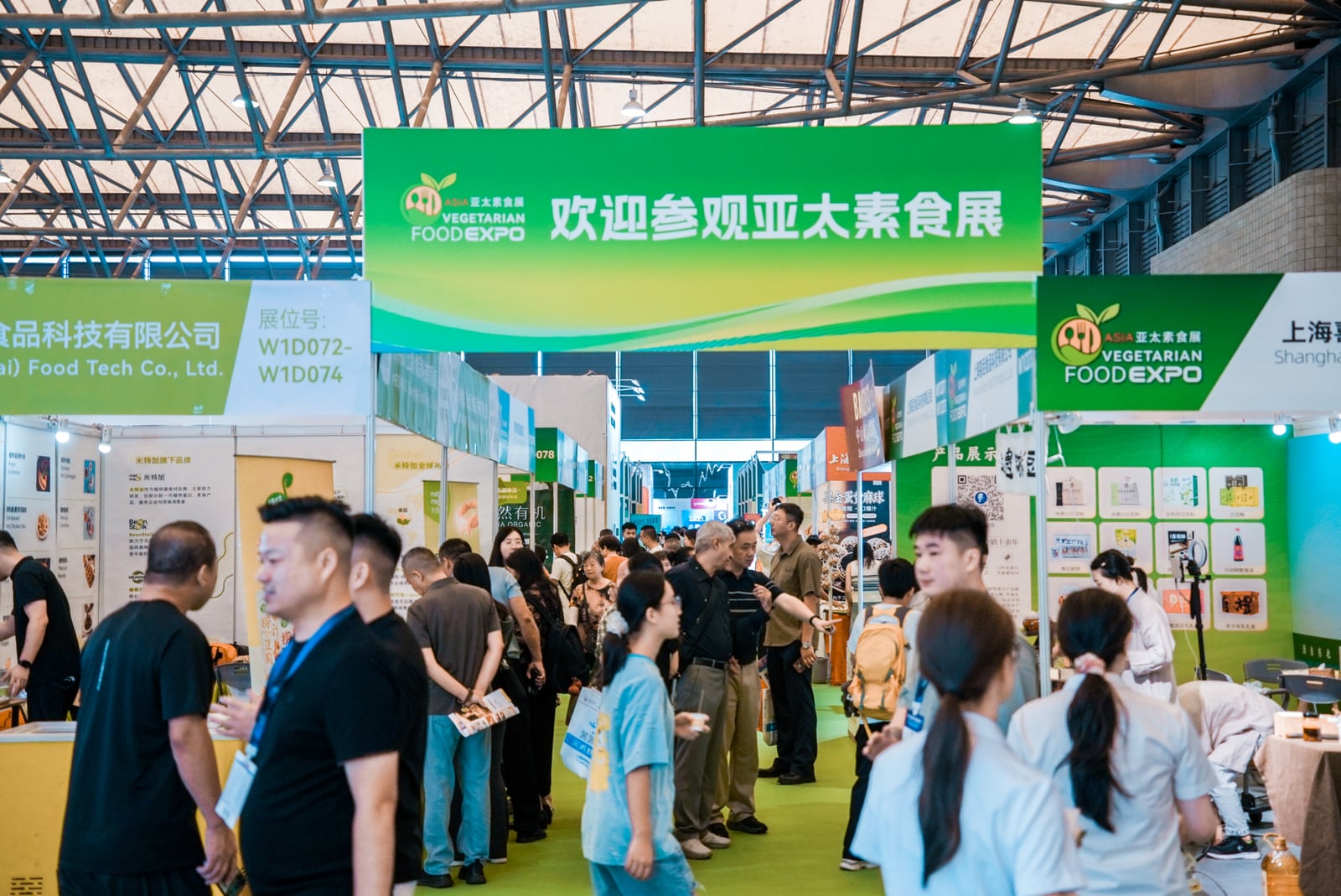
At a recent exhibition in Shanghai, vegetarian products, ingredients rooted in Chinese food traditions, and foodservice supplies occupied adjoining exhibition areas. Moving between them, the boundaries felt less distinct than they had during our previous visit.
For us, this raised a question: how are businesses associated with vegetarian food connecting with a wider market?
Familiar foods, new audiences
Soy and mushroom businesses were among the exhibitors exploring the vegetarian market. These are familiar food categories in China, with uses that extend well beyond consumers who identify as vegetarian or vegan.
For mushroom brand Yunpin Yunlang (云品云廊), the appeal was an audience already receptive to the connection between mushrooms and healthy eating. The brand had moved from the food-ingredients area into the vegetarian section, looking to reach visitors with a natural interest in its products.
Several conversations centred on finding new channels and business contacts. Some exhibitors had established products and production experience, but were still learning how to approach customers in this particular market. Other businesses chose the broader foodservice area as their starting point.
Miaojie Shengshi (妙洁盛世) offered a particularly concrete example through its Mediterranean-style institutional meals. The boxed meals on display contained eggs, which could be replaced on request. Serving schools, kindergartens and workplaces means meeting people through ordinary daily meals, rather than expecting them to adopt a vegetarian identity first.
Families visiting with children paid close attention to additives on ingredient lists. Their interest suggested a route into the market through everyday food choices, beyond an established vegetarian audience.
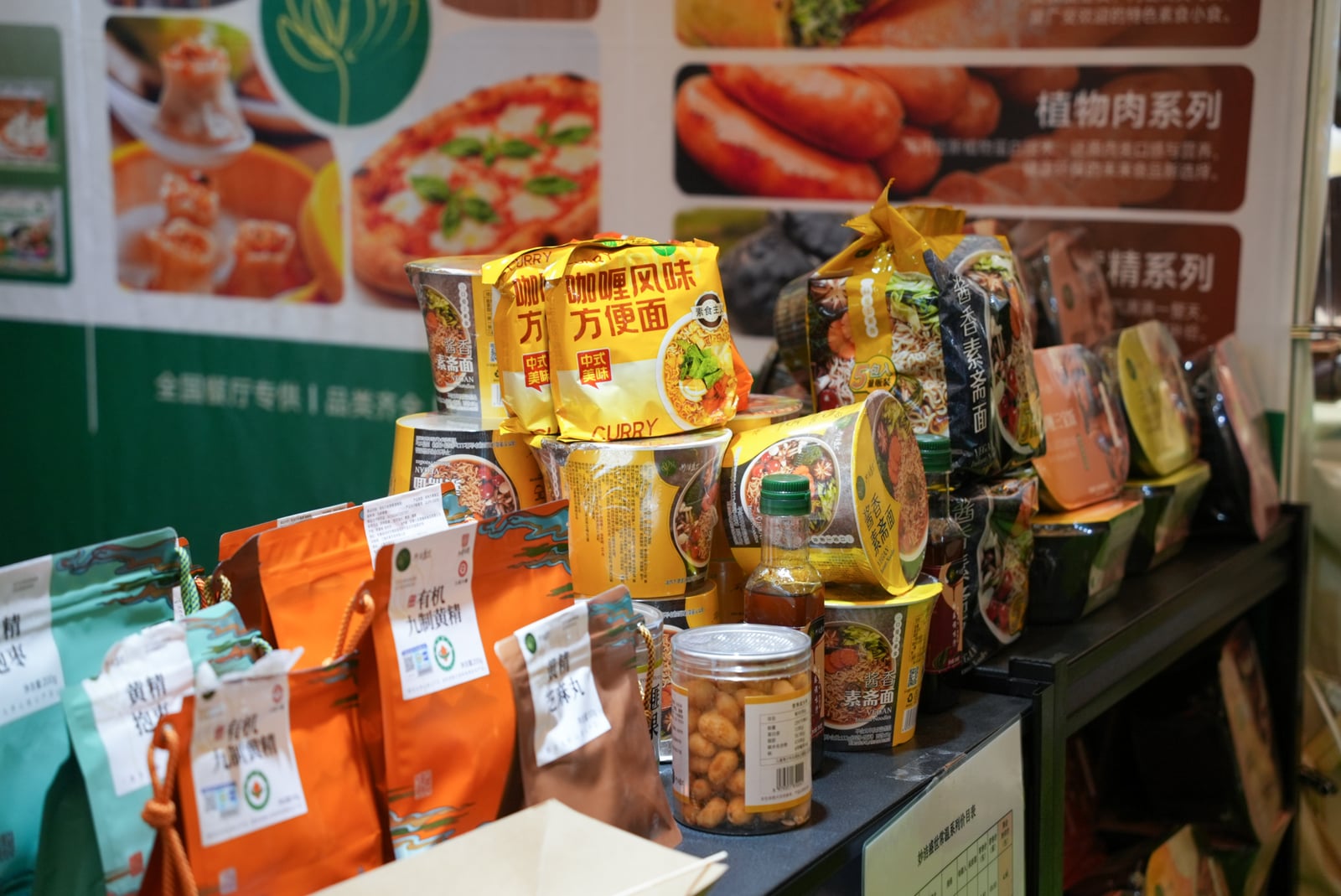
Packaged foods displayed at the exhibition. Photo: allveg.
Product development beyond imitation
Fermentation and ingredients associated with Chinese food traditions featured in a range of products we encountered, including soy-based cultured products, vinegar drinks and fermented foods. Fermentation also appeared in personal-care products, extending the exhibition conversation beyond food.
What stood out to us was how these products connected with a distinctly Chinese consumer context. Fermentation has a long history in Chinese food culture, while traditional ideas about nourishment—including the concept of food and medicine sharing a common origin (药食同源)—provide a familiar frame for ingredients such as kudzu root and dried citrus peel. At the exhibition, fermentation seemed to be bridging these traditions and contemporary vegetarian products, giving new formats a connection to familiar ways of thinking about food.
One tasting combined a soy-based cultured product with kudzu root and dried citrus peel. Our impression was that the citrus flavour helped soften the beany notes.
wishwill (愿也) also caught our attention. Its shredding technology offered us a glimpse of new possibilities for plant-based products.
Alongside products designed to replace meat or dairy, exhibitors were exploring flavour, familiar ingredients and everyday eating occasions.
Partnerships around existing capabilities
A co-branded collaboration between Yisuitang (一穗堂) and a producer of traditional stuffed tofu caught our attention. A craft traditionally associated with a meat filling had been adapted through a dedicated vegetarian production line for the collaboration. The project brought together the producer’s established craft and the brand’s understanding of vegetarian customers.
Manufacturers were also moving from behind the scenes into direct contact with customers. Seleglu (希力谷), a sauce contract manufacturer, brought its own soup-base products. Guangzhou-based Bencaotai (本草汰), one of the manufacturers behind the personal-care brand An Guniang (安姑娘), also exhibited its own products. Across food and personal care, we saw manufacturers exploring a more visible role in the market alongside their production work.
Smaller brands were pooling resources in a different way. An organic-products promoter brought several organic brands together on a shared stand, spreading exhibition costs and presenting a broader collection to visitors.
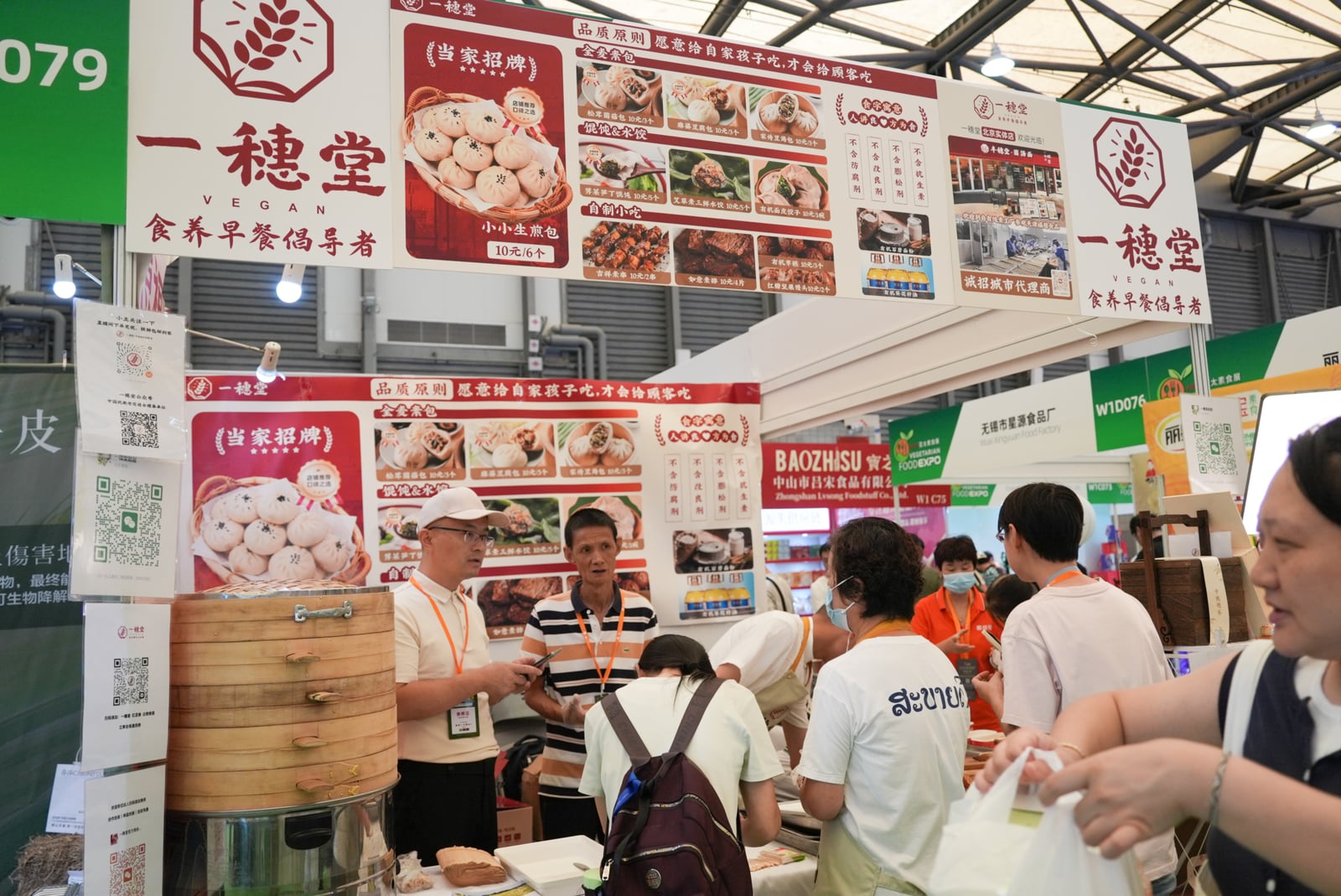
The Yisuitang (一穗堂) booth at the exhibition. Photo: allveg.
Overseas interest needs a clearer next step
Our team’s impression was that the exhibition’s overall scale and category mix had changed relatively little from the previous year. Conversations repeatedly returned to differentiation, new channels and overseas opportunities.
In some exhibitor conversations, investment in testing or certification depended on whether there was enough prospective demand to justify the cost.
A buyer needs sufficient information to assess a supplier; a supplier wants a clearer opportunity before committing further resources.
For overseas enquiries, specificity can help: identify the product, destination market, intended channel and documentation needed for the next decision.
What we take from the visit
At the exhibition, a Shanghai mother visiting with her child tasted the vegetarian stuffed tofu and said she would buy it if it were available in a supermarket. She was unaware of the co-branding or traditional-craft story behind it, and did not know it was vegetarian. What appealed to her was that it felt “clean” and tasted good.
The most useful signal was the range of attempts to reach beyond an established vegetarian audience: through familiar foods, different eating occasions, production partnerships and new channels.
In our conversations, we heard the pressure of intensifying competition in China: businesses were looking for growth by finding new demand within an existing market. Reaching different customers, opening new channels and working with complementary businesses were practical responses to that pressure. For AllvegHub, these conversations are a starting point for coordination—understanding where demand is emerging and which capabilities could help meet it.